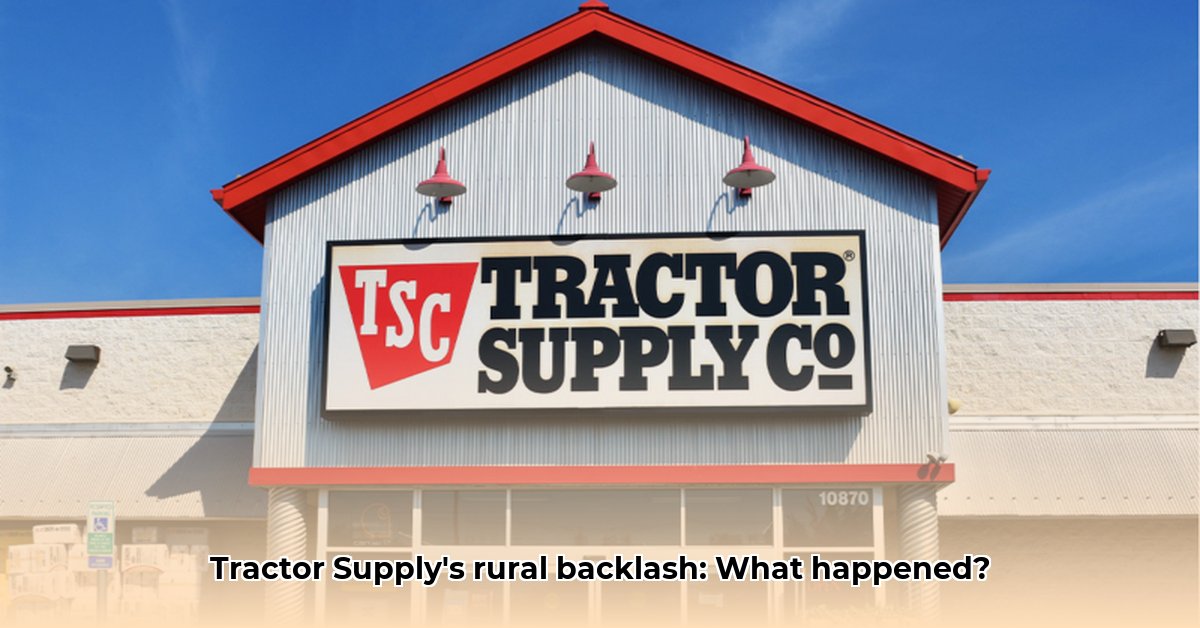
Tractor Supply, a retail giant catering to rural communities, recently scaled back its diversity, equity, and inclusion (DEI) and environmental sustainability initiatives following a significant conservative backlash. This decision, while seemingly driven by a vocal minority, raises critical questions about the complexities of corporate social responsibility (CSR) in diverse markets and the effectiveness of communication strategies targeting rural populations. The incident serves as a compelling case study in navigating potentially conflicting stakeholder interests and the long-term implications of reactive CSR adjustments.
The Backlash: A Coordinated Conservative Campaign
A targeted campaign, spearheaded by conservative activist Robby Starbuck, leveraged social media to mobilize a boycott against Tractor Supply. News outlets such as NPR and NBC extensively covered the campaign's tactics, which included amplified social media narratives and calls for boycotts targeting the retailer's DEI and environmental sustainability initiatives. This coordinated effort successfully pressured Tractor Supply into significantly altering its CSR strategy, prompting analysis on the efficacy of such campaigns and their ability to sway corporate decisions despite potentially not representing the views of the entire customer base. How representative was this vocal minority of Tractor Supply's overall customer base? This question remains central to understanding the long-term implications of the company's response.
Tractor Supply's Response: A Strategic Retreat or a Miscalculation?
In response to the campaign, Tractor Supply significantly reduced its DEI programming and scaled back its environmental targets. The company's official statements emphasized a renewed focus on aligning with the perceived values of its core customer base in rural America. While no formal apology was issued, the drastic shift in strategy serves as a de facto acknowledgment of the pressure exerted. However, the lack of transparent communication regarding customer feedback raises concerns about the company's understanding of its customer base and whether the decision was a calculated strategic retreat or a hasty reaction to targeted pressure. Did Tractor Supply accurately assess its customers' sentiments, or did it overreact to a highly organized, yet potentially unrepresentative, segment of its market?
Stakeholder Analysis: Short-Term and Long-Term Impacts
Tractor Supply's decision had immediate and far-reaching consequences for various stakeholders. The short-term and long-term impacts are analyzed below:
| Stakeholders | Short-Term Impact | Long-Term Impact |
|---|---|---|
| Tractor Supply | Potential short-term cost savings, avoidance of negative publicity | Potential long-term reputational damage, loss of talented employees, strained relationships with key customer segments, and decreased investor confidence. |
| Competitors | Potential gain in market share from customers dissatisfied with Tractor Supply's shift | Increased competition, potential for similar pressure campaigns targeting CSR initiatives. |
| Conservative Activists | Perceived victory, increased influence on corporate decision-making | Potential backfire if future actions are perceived as excessive or counterproductive. |
| LGBTQ+ Advocacy Groups | Disappointment and concern, renewed advocacy efforts | Increased activism, potential for broader coalitions to address corporate responsiveness to social pressure campaigns. |
| Employees | Uncertainty and potential morale decrease | Possible loss of key employees, negative impact on company culture and diversity. |
| Investors | Potential short-term stock market gains, potentially followed by long-term concerns about corporate values and future risks | Increased scrutiny of CSR strategies, potential for decreased investment from socially responsible investors. |
Alternative Narratives and Unanswered Questions
While the dominant narrative focuses on the success of the conservative campaign, several alternative perspectives warrant consideration. Did the campaign accurately represent the views of all Tractor Supply customers? The speed and scale of the company's response raise questions about the depth of its market research and the potential for an overestimation of negative customer sentiment. Furthermore, Professor Shaun Harper's research on contextualized DEI communication underscores the potential for a more nuanced approach that acknowledges regional differences in values and priorities. A more tailored messaging campaign, acknowledging and addressing potential concerns proactively, might have prevented the controversy entirely. The lack of transparency and the reactive nature of Tractor Supply's response suggest a missed opportunity for constructive dialogue and a more sustainable solution.
Conclusion: Navigating CSR in a Polarized Landscape
Tractor Supply's experience provides valuable insights for companies navigating the complex and often-polarizing landscape of corporate social responsibility. The case highlights the risks of reactive decision-making, underestimating the complexities of diverse communities, and the importance of proactive, transparent communication. While prioritizing short-term gains might appear lucrative, long-term reputational damage and the alienation of key stakeholders can outweigh any immediate benefits. A more nuanced, data-driven approach to CSR, recognizing cultural contexts and engaging diverse groups constructively, is essential for securing long-term success and building resilient brands. Future success for businesses facing similar challenges will hinge on preemptive and tailored communication strategies designed to build bridges, not walls, between corporate values and community expectations.